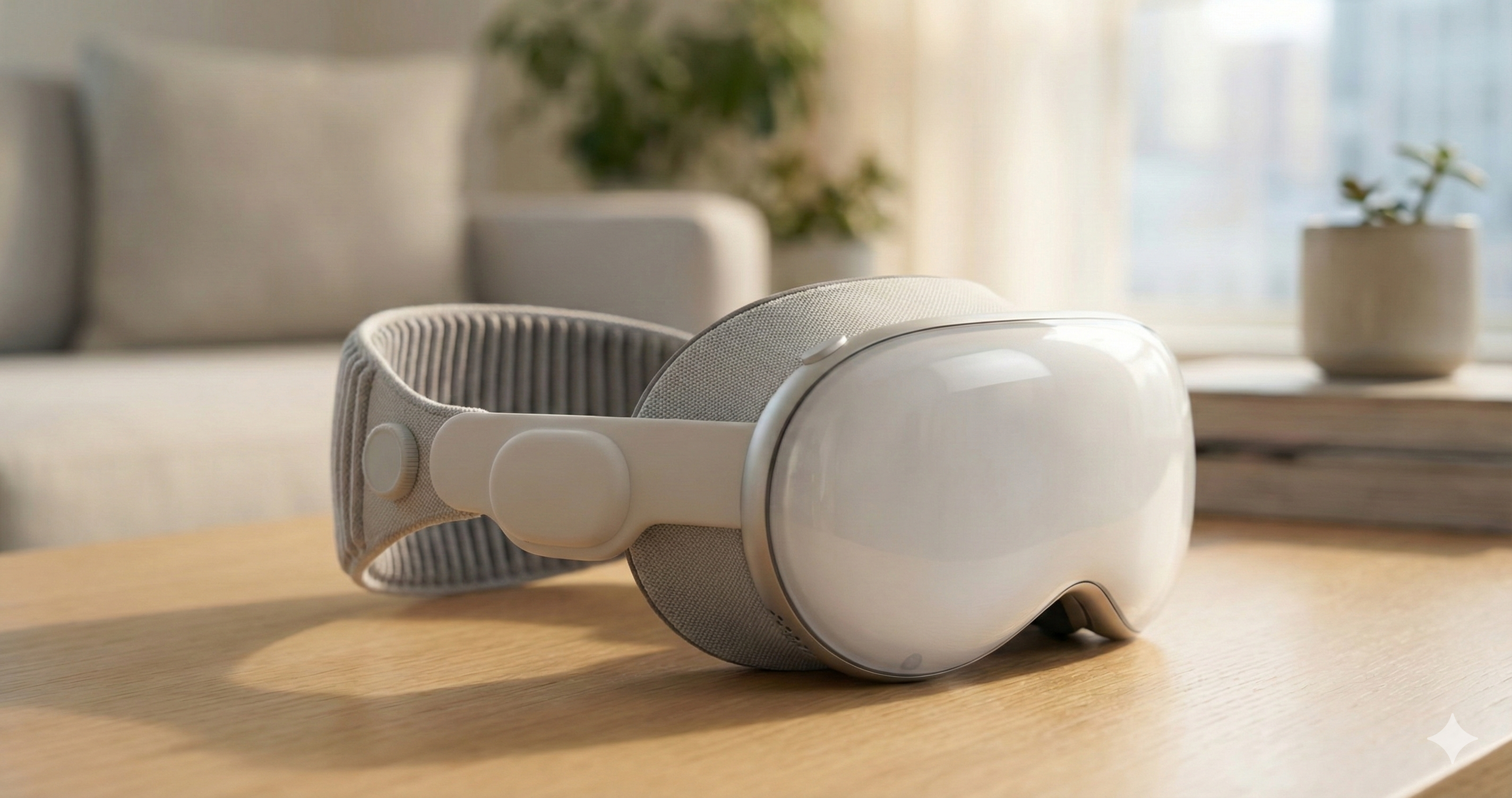
Vision Pro reintroduced the world to spatial computing, showing what it could feel like when apps escape screens and occupy space. Vision Air extends this journey, opening spatial computing to more contexts and more moments in everyday life.
People work in many places. They learn in motion, not only in classrooms. They relax across environments. Vision Air was designed for these rhythms, making spatial computing livable, portable, and available throughout the day. This expansion is already shaping three key ecosystems: productivity, education, and entertainment.
A New Era for Productivity: Work from Anywhere without Constraints
Spatial workflows gained their first breakthrough when VisionOS introduced Mac Virtual Display and room-scale multitasking. Users could surround themselves with immersive work environments that rivaled multi-monitor setups.
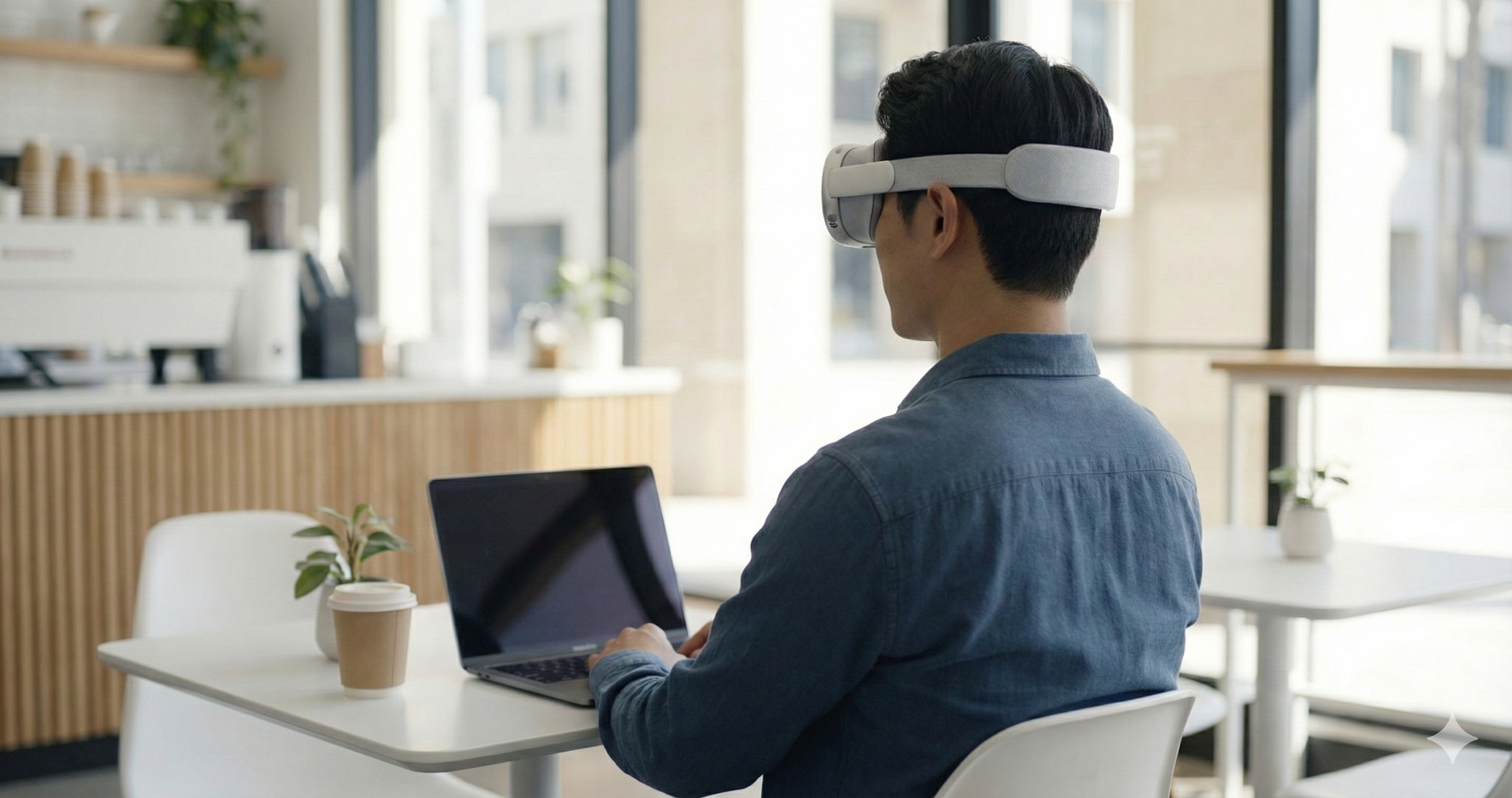
Vision Air builds on this foundation with a lighter form factor for longer sessions, expanded battery flexibility, and improved portability. Professionals can transition from home desks to cafés or library spaces without changing their workspace. Mac Virtual Display remains seamless, and tethered mode allows Vision Air to tap into Mac compute when needed for intensive work, positioning Vision Pro for deep creation and Vision Air for everyday mobility.
Built-in lens adjustment lets more people use Vision Air comfortably without dedicated prescription inserts. Shared devices become practical for education labs, office settings, and households.
For enterprise IT, Vision Air provides something unique: a spatial computer workers can comfortably use for hours, move with, and collaborate through without disrupting shared spaces. It makes spatial computing part of fieldwork, hybrid work, and modern knowledge work culture.
Education: Spatial Learning Becomes Normal Learning
Apple’s education community has already embraced Vision Pro for immersive simulation and visual learning. With Vision Air, this becomes easier to access and easier to scale.
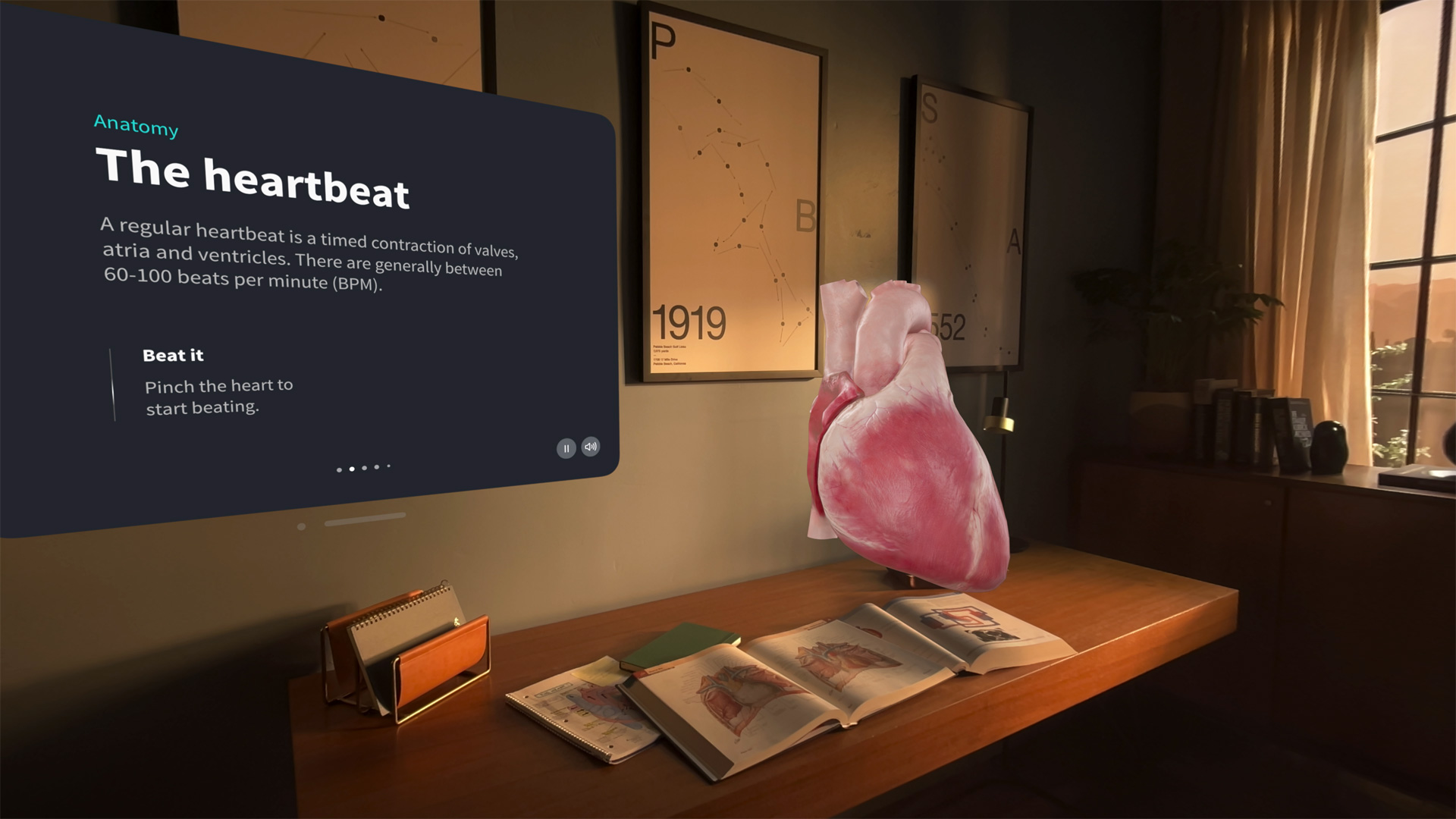
Professors can align models with real work surfaces. Students can annotate lectures floating in front of them. Research labs can overlay spatial information onto physical equipment. Group sessions can be shared without requiring personalized prescription lenses, thanks to Vision Air’s adjustable optical system. Allied health, engineering studios, architecture programs, and design schools can use Vision Air for walk-around thinking and shared critique spaces.
Spatial learning becomes something learners do, not something they visit.
Entertainment: Spatial Media Moves From Novelty to Habit
Immersive experiences have been a highlight of spatial computing, but until recently they were limited to short sessions. Entertainment partners are now embracing VisionOS more actively.
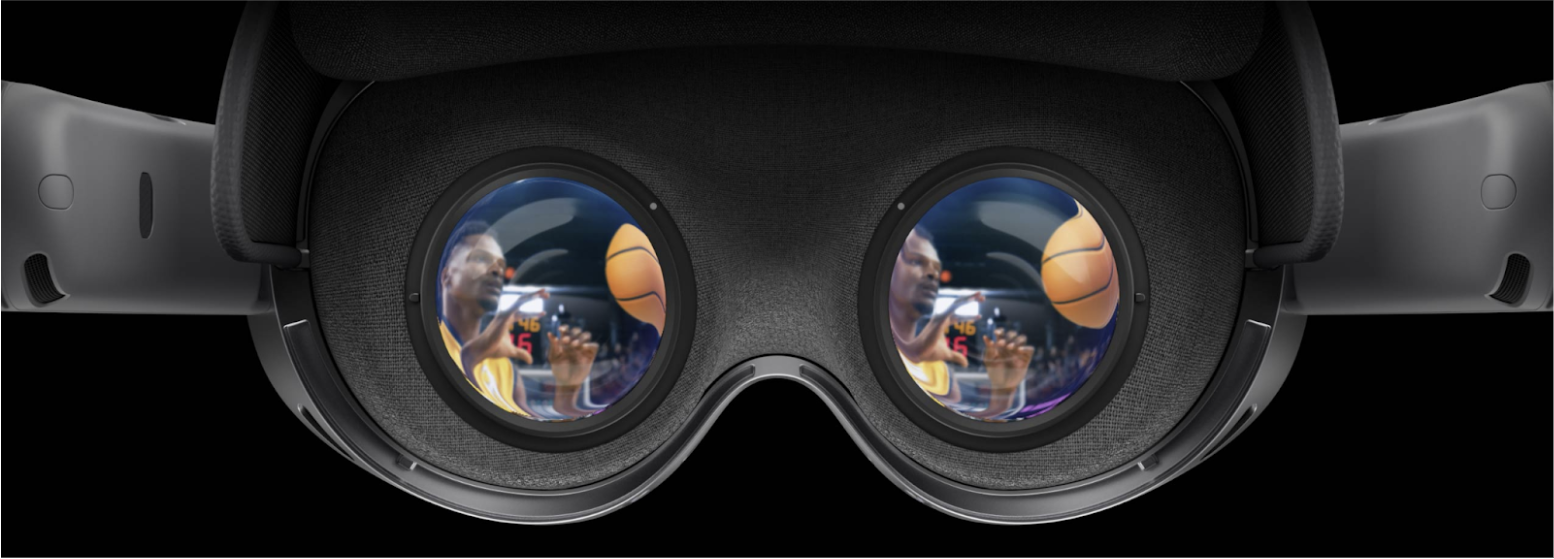
Netflix and YouTube are bringing dedicated apps to the platform, setting a foundation for widespread casual consumption. Apple Immersive Video continues expanding with scripted films, concerts, and live sports, including NBA broadcasts through Spectrum, interactive Apple Arcade experiences, and new titles designed specifically for VisionOS.
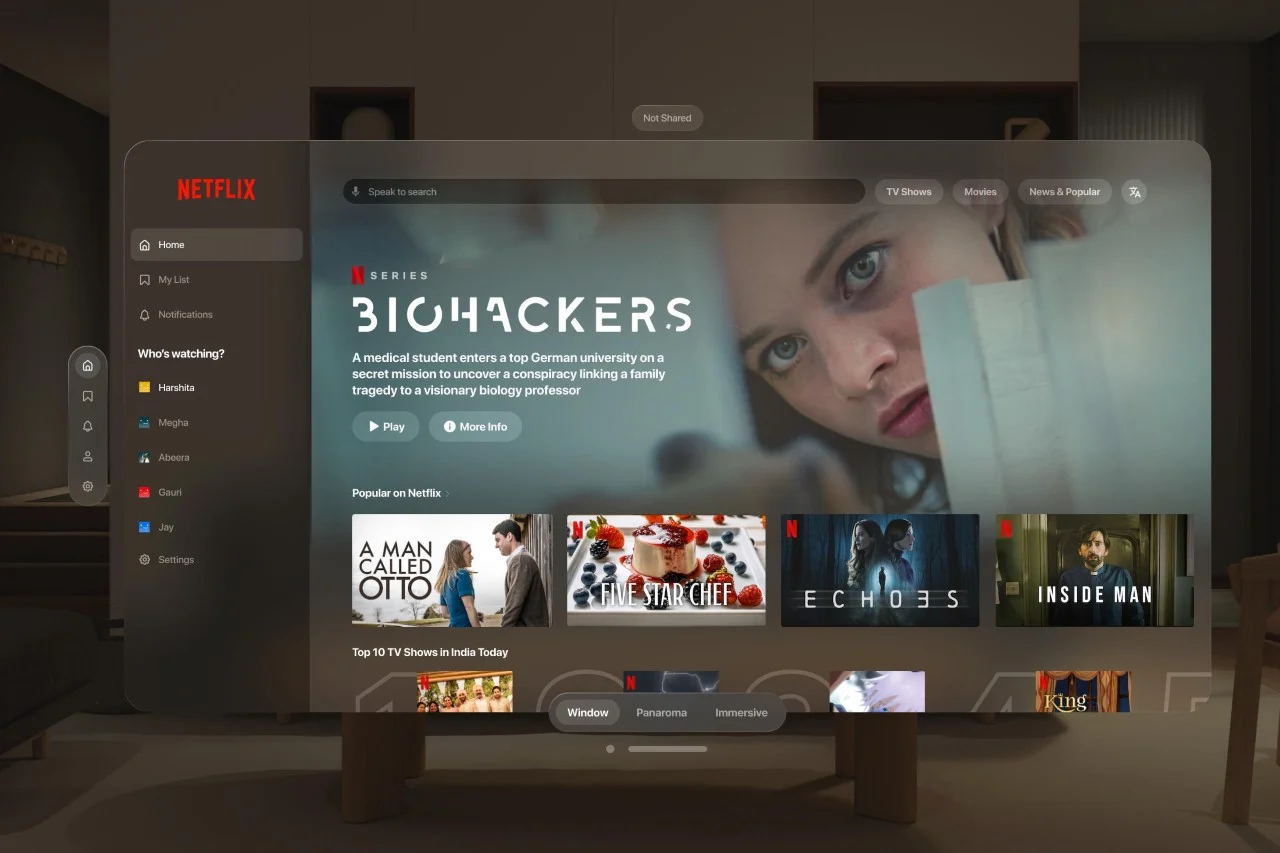
Vision Air supports these experiences while enabling a new behavior: spatial entertainment that exists alongside everyday life, not apart from it. Watching an immersive concert clip for a few minutes between meetings or playing a spatial game at a park bench becomes ordinary.
Entertainment becomes ambient, social, and available instead of extraordinary but distant.
A Better Experience for Developers: Build Once, Live Everywhere
Developers shaped the early journey of spatial computing by imagining new workflows, interfaces, and tools for Vision Pro. Vision Air broadens that reach by making everyday spatial interaction mainstream, and it brings new investment to developer experience.
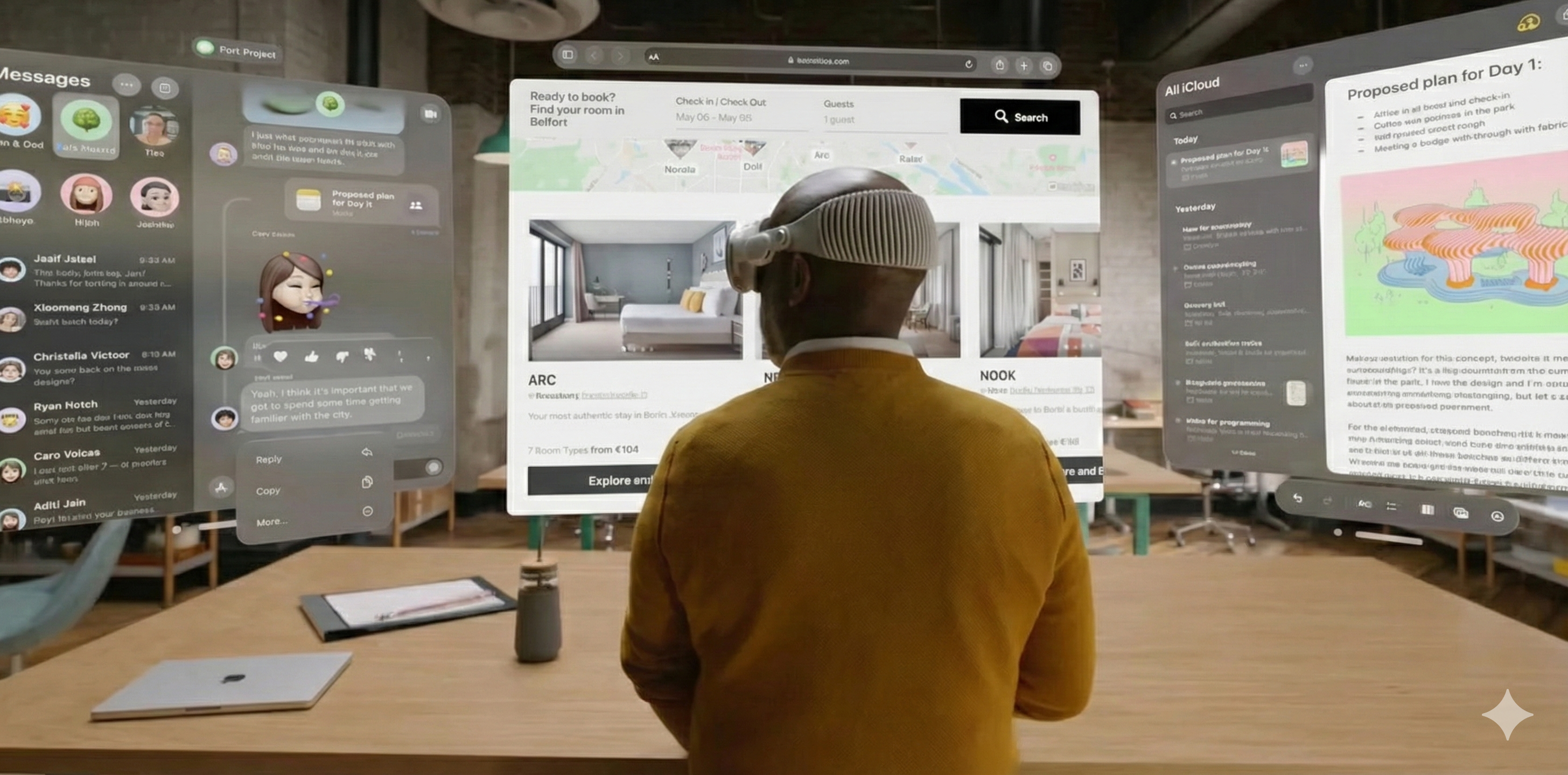
A new adaptation framework within the VisionOS SDK helps lighter weight macOS and iPadOS applications transition into spatial form faster, allowing existing apps to present contextually aware spatial surfaces without re-architecting their entire codebase. This reduces time to market and accelerates ecosystem growth across Vision Air and Vision Pro.
Vision Air uses an A20 Pro chip designed for responsive everyday performance. It delivers the visual fidelity, fluid rendering, and input responsiveness required for spatial computing while maintaining efficiency and wearability. When specialized workflows require additional compute, Vision Air offers tethered mode access to Mac systems, giving developers a flexible performance continuum.
VisionOS also introduces intelligent interface elevation, where AI-assisted layout engines help translate conventional 2D interfaces into layered spatial experiences. This makes it possible for many apps to become spatially meaningful without needing to be rebuilt from scratch, and it lets developers spend more time defining the interaction model rather than re-engineering base UI systems.
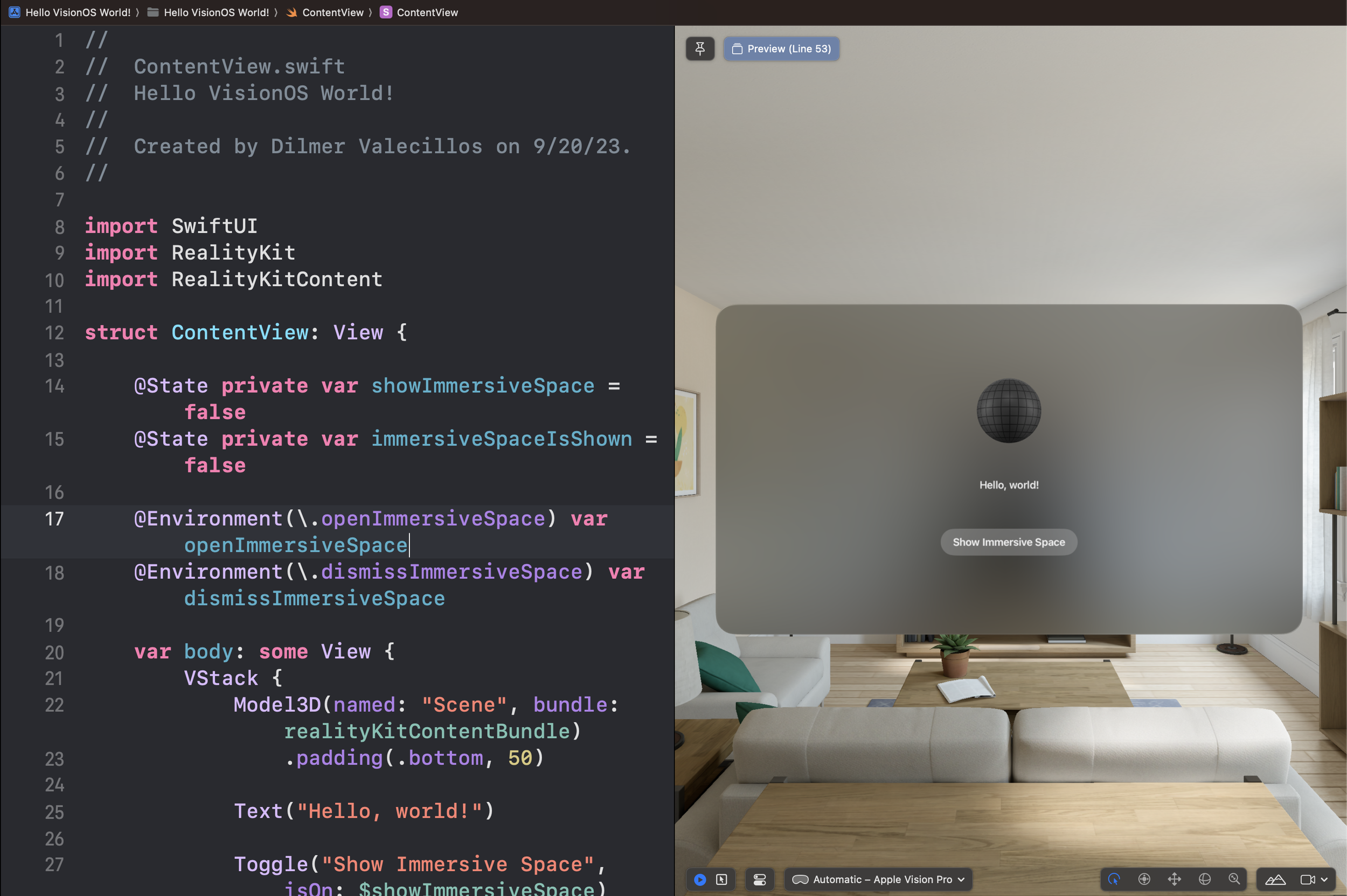
Together, these advances give developers the best of both worlds: a more scalable platform to reach more users, and tools that help them invest in meaning, immersion, and utility rather than porting and infrastructure lift.
Two Products, One Platform
Vision Pro introduced the world to what spatial computing could feel like at its most immersive. Vision Air carries that foundation forward by making spatial computing part of how people move, think, work, and learn throughout the day. Rather than replacing one another, the two products together represent a platform growing in range and relevance, offering people the freedom to choose deeper focus or lighter mobility as their moment demands. With Vision Air, spatial computing steps beyond showcase experiences and begins its evolution into something people live with. The everyday ecosystem has arrived, and its possibilities are only beginning to unfold.